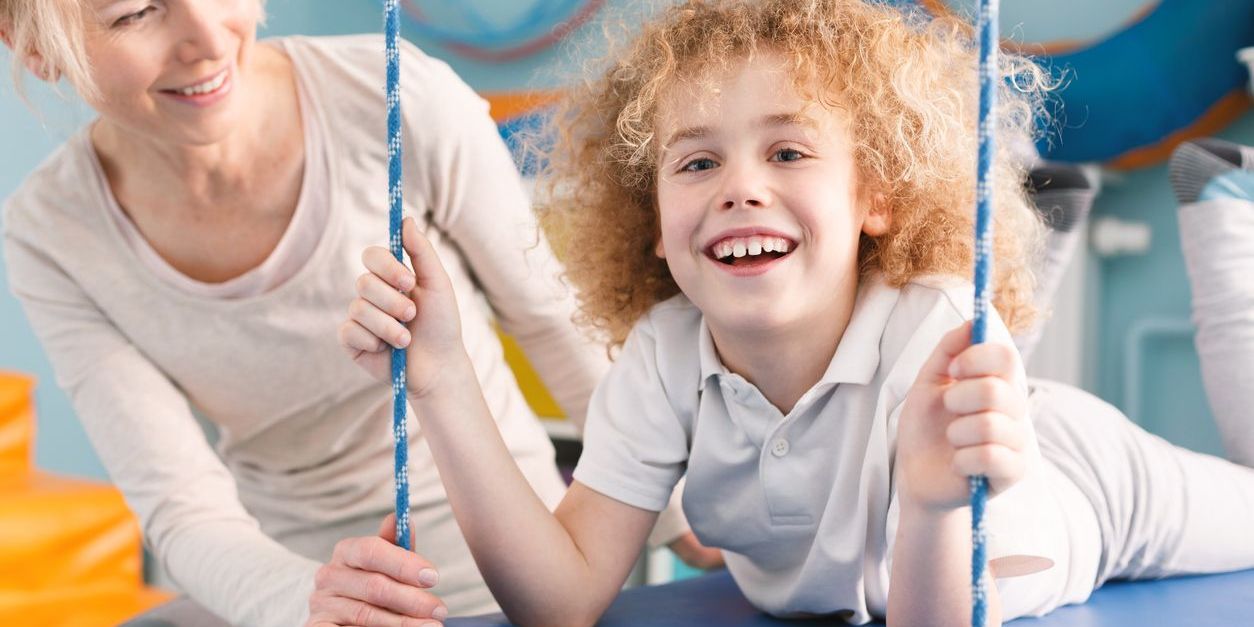
Summary: Yes, physical activity can help children with autism spectrum disorders (ASD). Research shows that physical activity can help children with autism develop important skills in core functional areas.
Key Points:
- Symptoms of autism spectrum disorder can be mild, moderate, or severe.
- Children with moderate and severe symptoms often experience significant problems with communication, social skills, and behavior.
- Specific types of physical activity can help children with autism improve skills in all three areas: social skills, communication, and behavior.
- Physical activity can also reduce obesity and improve self-esteem, both common issues faced by children with developmental disorders.
What is Autism Spectrum Disorder?
In the fifth revision of the Diagnostic and Statistical Manual of Mental Disorders, Volume 5 (DSM-5), mental health experts combined several different, but related, developmental disorders into a single category: autism spectrum disorders.
The American Psychological Association (APA) defines autism spectrum disorder(s) as follows:
“…any one of a group of disorders with an onset typically occurring during the preschool years and characterized by varying but often marked and persistent deficits in social communication and social interaction, including difficulties with social-emotional reciprocity, nonverbal communication behaviors, and social relationships, along with restricted and repetitive patterns of interests, behaviors, and/or activities.”
Autistic disorder, which most people think of when they think of autism, may also be referred to simply as ASD. The DSM-5 defines three levels of severity for people with ASD:
- Level 1: Needs support.
- Level 2: Needs substantial support
- Level 3: Needs very substantial support
The level of support needed by individuals with ASD is determined by the frequency and severity of disruption caused by symptoms at school, at home, and/or in social situations, and the degree to which symptoms impair the ability to function at school, home, or in social situations.
In this article, we’ll share information published in the article “Beneficial Use and Potential Effectiveness of Physical Activity in Managing Autism Spectrum Disorder,” which examines and evaluates or current knowledge about what types of exercise and physical activity help children with autism spectrum disorder (ASD).
First, however, we’ll share the common signs and symptoms associated with ASD.
Autism Spectrum Disorder (ASD): Signs and Symptoms
The National Institute on Mental Health (NIMH) identifies the following common symptoms among people with ASD:
Symptoms associated with communication and social behavior:
- Difficulty making and/or maintaining eye contact
- Seeming to/appearing not pay attention to/acknowledge when other are talking
- Rare or infrequent expression of interest, emotion or pleasure/happiness/enjoyment with activities and/or objects
- Slow or no response to their name
- Slow or no response to verbal address/bid for attention
- Problems maintaining conversation/difficulty with typical back and forth talking
- Talking excessively about topics of interest, with no attention to social cues or back and forth conversation
- Mismatch between what’s happening in-the-moment and in-the-moment facial expression, gesture, and movement.
- Atypical tone of voice, may lack emotion, lack variation in tone and expression, or sound flat
- Difficulty understanding the POV of other people
- Difficulty understanding and predicting the actions of other people
- Problems aligning behavior to match social situations
- Difficulties sharing in imaginative play or in making friends
Common repetitive and/or restrictive behaviors among people with ASD:
- Frequent/persistent repetition of physical actions/behaviors
- Atypical vocal habits, such as frequent/persistent repetition words or phrases
- Intense and persisting interest in specific subject areas, often associated with numbers, details, or facts related to specific subject areas
- Hyperfocus on specific things, often moving objects/specific parts of objects
- Significant, excessive, sometimes extreme problems transitioning from one activity to another
Common sensory differences/other common issues among people with ASD:
- Hyper (more) or hypo (less) sensitive than typical to sensory input, including:
- Light
- Sound
- Clothing, i.e. textures against skin
- Temperature
- Sleep difficulties
- Irritability
Strengths among people with ASD that aren’t typical for others: include, but aren’t limited to:
- Ability to learn large amounts of detailed information about specific things quickly, beyond what most people can learn in the same amount of time.
- Ability to retain specific information for a long time, far beyond typical.
- Exceptionally strong ability to learn/process visual information, recognize visual patterns, and recognize changes/disruptions in visual patterns
- Exceptionally strong ability to learn/process auditory information, recognize auditory patterns, and recognize changes/disruptions in auditory patterns
- Savant-level skill and ability in specific subject areas, including math, science, music, and art
Next, we’ll share the latest data on the prevalence of ASD among children and teens in the U.S.
How Many People Have Autism Spectrum Disorder (ASD)?
The Centers for Disease Control (CDC) resource on Autism Spectrum Disorder (ASD) and the study Prevalence and Trends of Developmental Disabilities among Children in the US: 2009-2017report report the following statistics on ASD among children and adolescents in the U.S.
Prevalence of ASD in the U.S.: Children and Adolescents
- In 2022:
- 3.2% of children 8 years old received a diagnosis for ASD
- Present in all racial, ethnic and socioeconomic groups
- More prevalent among boys than girls
- Between 2009 and 2017:
- Children with any developmental disability: 17%
- ADHD: 9%
- Learning disability: 7.7%
- ASD: 1.7%
- Intellectual disability: 1.5%
Next, let’s look at those figures broken down by age and demographic groups.
Prevalence of ASD in the U.S.: Children and Adolescents, Detailed Statistics
- Total: 1.7%
- By age group:
- 3-5: 1.68%
- 6-11: 1.75%
- 12-17: 1.75%
- By gender:
- Girls: 0.78%
- Boys: 2.66%
- By race/ethnicity:
- White: 1.95%
- Black: 1.54%
- Hispanic: 1.34%
- Other: 1.77%
Experts identify seven categories of effective support for people with ASD:
- Behavioral therapy, such as applied behavioral analysis (ABA).
- Developmental therapy, i.e. speech, language, occupational therapies.
- Educational support, to build social, communication, and behavioral skills.
- Social and relational techniques, such as Floortime.
- There is no medication for the symptoms of ASD, but many people with ASD receive medication for co-occurring conditions such as ADHD or depression.
- Psychotherapy, including cognitive behavioral therapy (CBT) and dialectical behavior therapy (DBT)
- Complementary support, including expressive therapies, mindfulness, and exercise
For the rest of this article, we’ll focus on recent developments and information on the use of one specific complementary support, exercise, for children with autism.
Physical Activity and Children With Autism: What Works?
In the large-scale review/meta-analysis we introduce briefly above – “Beneficial Use and Potential Effectiveness of Physical Activity in Managing Autism Spectrum Disorder” – experts on child development reviewed the available research on how physical activity can help child with autism spectrum disorders, based on previous conclusions on the topic:
“Meta-analysis and systematic reviews have concluded that physical activity has positive effects on social skills and behavior in young children and adolescents with autism. Activities such as martial arts have been singled out as being particularly beneficial.”
Their first, and perhaps most important finding, is that parental involvement in physical activity for children with autism improves outcomes. This is important because in the past, parents were often blamed/cited as the cause of ASD. Current research debunks this notion, and shows that when parents participate in physical activity with children with autism, both the parents and the children benefit, with children demonstrating gains in key behavioral, functional, and relational areas.
With that in mind, the study indicates two categories of support are effective: comprehensive treatment/support models, and focused interventions. The former are structured systems to support children with autism overall, while the latter are designed to treat specific symptoms. In general, physical activity as a support for children with autism is effective in both categories of support, and can improve outcomes within the parameters of each approach.
Here’s what the researchers found.
Physical Activity for Children with Autism Spectrum Disorders
- Studies show that general physical activity programs help improve:
- Social involvement
- Behavior
- Communication skills
- Body awareness
- Mental health
- Studies examining programs based on the Treatment and Education of Autistic and Related Communication Handicapped Children (TEACCH) showed improvement in:
- Communication
- Cooperation
- Self-control
- Academic performance
- Research on specific activities for children with autism shows:
- Studies on the impact of individual vs. group physical activity show:
- Individual activities facilitated by skilled instructors and/or parents led to the most significant improvements in social skills and maladaptive behaviors
- Experts propose that group activities can support social skill building, but the current evidence skews toward individual over group activity.
In addition, this review/meta-analysis shows that physical activity children with autism by reducing obesity and improving self-esteem. Involvement in a positive, supportive social environment and engaging in activities that promote social contact – under the supervision and with the support of parents or mental health providers/therapists – can help children with autism improve basic skills in all functional areas, as well as improve overall physical and emotional health. Therefore, the answer to the question we pose in the title of this article, Can Physical Activity Help Children with Autism Spectrum Disorders, is a clear and resounding “Yes.”
How This Information Helps Children With Autism Spectrum Disorders
The primary benefit of studies like this one is to demonstrate that children with autism have the ability to participate and benefit from physical activity. While individuals with severe and disruptive symptoms may not have the ability to participate in team sports due to communication problems and atypical behaviors, participating in physical activity can improve communication and help individuals learn to match behaviors to the situation.
In addition, individuals with mild and/or moderate symptoms can and do participate in both team and individual sports, which increases their capacity in all functional areas and improves self-esteem, creating a virtuous cycle where skill-building, physical activity, and mental health create a mutually reinforcing feedback loop, which offers significant benefits for people with autism.
We’ll close this article with a list of people with autism who rose to the top level of their respective sports, meaning they became professionals. It’s true that there are scores of athletes with ASD who participate in Special and Paralympics. This list includes people who succeeded in mainstream sports, which shows that people with ASD can not only enjoy sports, but they can also excel, and reach the highest level possible when competing against anyone.
11 Professional Athletes With Autism Spectrum Disorder (ASD)
- Jim Eisenreich. American baseball player, spent 15 years playing Major League Baseball (MLB), with highlights including Kansas City Royals Player of the Year in 1989.
- Tony Snell. American basketball player, spent 10 years in the National Basketball Association (NBA) with the Chicago Bulls, Milwaukee Bucs, Detroit Pistons, Portland Trailblazers, Atlanta Hawks, and New Orleans Pelicans.
- Mahmud Abdul-Rauf. American basketball player, spent 9 years in the National Basketball Association (NBA) with the Denver Nuggets, Sacramento Kings, and the Vancouver Grizzlies.
- Armani Williams. American race car driver, competes in NASCAR-Canada.
- Ulysse Delsaux. French race car driver, competes in NASCAR-Europe.
- John Howard. American MMA fighter, competed in the Ultimate Fighting Championship (UFC), with a record of 28-16-1.
- John O’Kaine. Englishman, professional footballer (soccer), played for Manchester United, Everton, Bolton, and Blackpool in the English Premier League (EPL).
- Joseph Barksdale. Football player for the San Diego Chargers in the National Football League (NFL).
- Tom Stoltman. Scottish weightlifter who won the World’s Strongest Man competition in 2021, 2022, and 2024.
- Billy Mayfair. Professional golfer on the PGA Tour, tournament winner.
- Satoshi Shimizu. Japanese boxer, won a Bronze medal in boxing at the 2012 London Olympics.
We’ll close by bringing attention to the first name on the list: Jim Eisenreich. Diagnosed with ASD and Tourette’s Syndrome, he had to leave baseball due to Tourette’s. However, when he learned more about his diagnoses and received treatment, he developed the skills necessary to return to the major leagues and enjoy a successful career.
Eisenreich – and every athlete on this list – prove that we should live by the maxim, ASD and developmental disorders notwithstanding:
Let the kids play!

Angus Whyte has an extensive background in neuroscience, behavioral health, adolescent development, and mindfulness, including lab work in behavioral neurobiology and a decade of writing articles on mental health and mental health treatment. In addition, Angus brings twenty years of experience as a yoga teacher and experiential educator to his work for Crownview. He’s an expert at synthesizing complex concepts into accessible content that helps patients, providers, and families understand the nuances of mental health treatment, with the ultimate goal of improving outcomes and quality of life for all stakeholders.
 Giavanna Aplin, MSN, FNP-C
 Alex Pack, PMHNP-BC
 Heather Huitema, PMHNP-BC
 Dr. Mark Melden
 Myriame Nicolas, PMHNP-BC
 Charlie Perez, PMHNP-BC
 Kelvin Poon, MSN, PMHNP-BC

 Apneet Mann, FNP-C
 Joanne Talbot Miller, M.A., LMFT
 Rachael Hueftle, NP
 J. Heather Fitzpatrick, LCSW
 Agata Nowakowska
 Brianna Meacham
 Maha Moses, PhD
 Rebecca McKnight, PsyD
 Tiffany Holm N.P.
 Dede Echitey, PMHNP-BC