
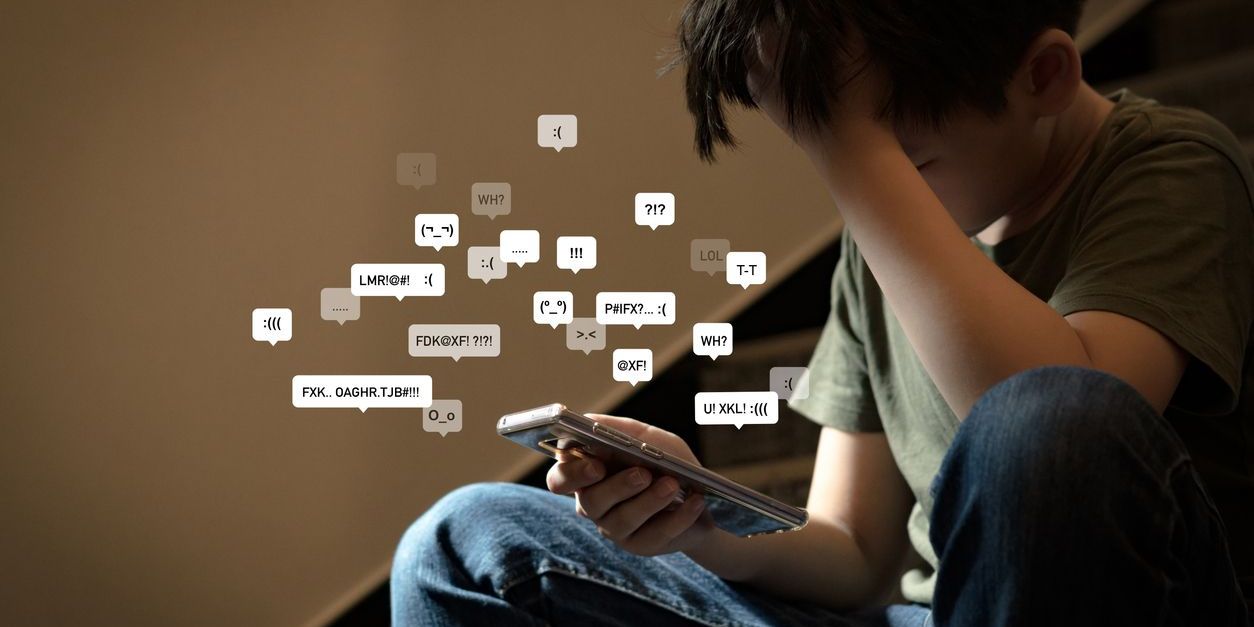
Summary: We can define problem internet use for teens by using templates designed to define problem alcohol or substance use among adults.
Why This Matters:
Although there’s no classification in the Diagnostic and Statistical Manual of Behavioral Disorders, Fifth Edition (DSM-5) for problematic internet or social media use – aside from internet gaming disorder – a critical mass of parents, mental health providers, and policymakers think there should be clear guidelines that define parameters for problem internet use for teens.
Key Points:
- Smartphone ownership and internet media use is nearly universal in the U.S.
- Children, teens, and adults spend hours a day online or on their phones – some more than others, of course
- Previous data shows specific patterns of use can cause specific harm to specific demographic groups
- Mental health professionals suggest a guide for defining levels of use, from moderate to problematic to disordered, following a template developed for alcohol consumption by the National Institute on Alcohol Abuse (NIAA)
The Problem of Media Use Among Teens and Young Adults
If you follow the news online, in print, or on television, you know there’s an ongoing, robust debate about the impact of screen use on mental health. By screen use, we mean all the newer forms of screens, with the exception of traditional television: smartphones, desktop computers, laptop computers, and tablets.
With all the attention on this topic, it would be fair to assume there’s already a significant amount of research to inform our views and facilitate our decision-making processes, but according to the Surgeon General of the United States in the report “Social Media and Youth Mental Health: The U.S. Surgeon General’s Advisory,” that’s not the case:
“Despite the widespread use among children and adolescents, robust independent safety analyses on the impact of social media on youth have not yet been conducted. There are increasing concerns among researchers, parents and caregivers, young people, healthcare experts, and others about the impact of social media on youth mental health.”
That’s true: there have not been safety analyses conducted on screen use in the way there are safety analyses conducted on consumer products such as automobiles, for instance. Researchers have, though, conducted studies on the impact of screen time and social media use on mental health, with most of the studies focused on teens.
Here’s a basic summary what we know so far:
Current Research: Facts on Problem Internet Use for Teens/Young Adults
- Teens who report excess social media use – over three hours per day – show elevated risk of depression and anxiety.
- Teen girls who report excess social media use show increased risk of depression and eating disorders
- Teen girls who engage in negative comparison on social media are at highest risk of mental health problems.
- Research on internet use among adolescents in the U.K. reported heavy social media use was associated with increased risk of depression, anxiety, low self-esteem, and being bullied.
- College students who participated in the rollout of a new social media platform reported increases in anxiety and depression
That information offers a solid idea of what we know about the harms associated with internet use. To date, research doesn’t confirm that smartphones and social media are the root of all problems in modern society, but it does show that when people are online literally all the time, and they engage in specific types of use – such as negative comparison – then real harm can and does happen.
About Comparison: For Parents
To learn more about comparison in the context of social media, please refer to the three articles below. If you’re the parent of a preteen girl, we encourage you to take the time to learn about the phenomenon of negative comparing on social media. Among the problems associated with social media and internet use, negative comparison among younger teenage girls is one of the most serious.
These articles can help:
- The Filter Effect: What Does Comparing Our Bodies on Social Media Do to Our Health?
- Social Comparisons: A Potential Mechanism Linking Problematic Social Media Use With Depression
- Social Media, Youth, and Comparison
To be clear, comparison, specifically negative comparison, is unhealthy for anyone of any age. However, data shows – and we think it merits repeating – that preteen girls are most vulnerable. A behavior that starts out fun – looking at cute pics – can turn sideways when issues of self-esteem appear. Younger teen girls need support and guidance navigating the potential negative consequences of this behavior, because the dynamics at play are complex, and the solution is not as simple as just don’t do it.
Before we share the proposed guidelines for how we might define problem internet use for teens, we’ll take a moment to outline the scope of the problem.
How Many People in the U.S. Use Screens?
A report on smartphone and internet behavior published by the Pew Research Center shows the following data from 2021 on people age 13+ in the U.S.:
- 90% reported owning a smartphone
- 95% of adolescents 13-17 reported owning a smartphone
- 90% report owning a computer, tablet, or laptop
- 97% of adolescents report being online every day
- 46% of adolescents report being online all the time
Another report from Pew Research shows the percentage of teens 13-17 who use the following popular social media sites every day:
- YouTube: 71% / On YouTube constantly during typical day: 16%
- TikTok: 58% / On TikTok constantly during typical day: 17%
- Snapchat: 51% / On Snapchat constantly during typical day: 14%
- Instagram: 47% / On Instagram constantly during typical day: 8%
- Facebook: 19% / On Facebook constantly during typical day: 3%
This data is instructive. Not only does it tell us where teens are online, it also proves what kids have been telling us for ten years now: Facebook is for old people. But that’s not the real point of this data, obviously. What we want to foreground are the percentages of smartphone ownership and use from the first bullet list: almost everyone has a smartphone, most teens are online every day, and almost half of teens are online all the time.
With all of the above in mind – the mental health impacts, the information on comparing, and the ownership and usage data – let’s take a look at the proposed guidelines for defining levels of internet use we mention in the introduction.
How Much is Safe, How Much is Too Much: How to Define Problem Internet Use for Teens and Young Adults
In the publication “Toward Defining Problematic Media Usage Patterns in Adolescents,” a group of physicians and PhDs working in adolescent mental health collaborated on creating a set of guidelines to define problem internet use for teens. The guidelines are loosely based on parameters established by the NIAA for determining levels of alcohol consumption, from moderate – nominally safe usage – to use that meets criteria for a clinical behavioral health disorder.
We’ll present the NIAA drinking guideline first, then the parallel, proposed internet/media use guideline second.
Template for Defining Problem Internet/Screen Media Use Among Teens
Drinking Pattern Defined By NIAA
- Moderate:
- Two drinks or less a day for men
- One drink or less for women
Proposed Internet/Screen Media Usage Pattern Definition
- Moderate:
- Less than five hours per day
Drinking Pattern Defined By NIAA
- Binge drinking:
- Five drinks in two hours for men
- Four drinks in two hours for women
Proposed Internet/Screen Media Pattern Definition
- Binge: More than four hours in a single session/sitting
Drinking Pattern Defined By NIAA
- High-intensity drinking:
- Ten drinks or more over 24 hours for men
- Eight drinks or more over 24 hours for women
Proposed Internet/Screen Media Usage Pattern Definition
- High-intensity use: 12 hours or more over a 24-hour period
Drinking Pattern Defined By NIAA
- Heavy drinking:
- Five or more drinks on any one day, or 15 or more drinks per week for men
- Four or more drinks on any one day, or eight or more drinks per week for women
Proposed Internet/Screen Media Usage Pattern Definition
- Heavy media use: Nine hours or more on any one day, 60 hours or more per week
Drinking Pattern Defined By NIAA
- Alcohol misuse: Drinking in a manner, situation, or amount that harms self of others
Proposed Internet/Screen Media Usage Pattern Definition
- Media misuse: Binge, high-intensity, and heavy use that includes:
- Use during inappropriate times, i.e. at school or during sleeping hours
- Viewing age-inappropriate content
- Viewing harmful content
- Use during dangerous situations, e.g. while driving
Drinking Pattern Defined By NIAA
- Alcohol use disorder (AUD): Reduced or impaired ability to stop or reduce alcohol use, despite obvious and demonstrable social, occupational, relational, emotional, and physical consequences
Proposed Internet/Screen Media Usage Pattern Definition
- Media use disorder (MUD): Impaired ability to stop or reduce medial use, despite negative effects on social life, school performance, occupational capacity, mental health, and emotional health.
Those definitions look logical and applicable, except for this first one, on moderate use. Based on the data we share above, a safer cutoff point would be close to three hours per day for moderate use. However, this is an excellent start – and one that can help inform individuals, parents, and providers as we move forward, deeper into the information age.
We’ll close this article with a quick report on a study performed in Denmark that’s directly relevant to our discussion.
What Happens When Families Reduce Screen Use for Two Weeks?
A group of adolescent mental health experts designed a study called “Screen Media Use and Mental Health of Children and Adolescents: A Secondary Analysis of a Randomized Clinical Trial” with the following research goal:
To investigate the effects of a 2-week screen media reduction intervention on child and adolescent mental health.
To conduct the study, the research team recruited 89 families with a total of 181 children and adolescents for a two-week trail and a follow up session after two weeks. Researchers divided the families into an experimental group and a control group. The experimental group engaged in a two-week intervention, which involved an intentional reduction of leisure time screen media use, with the following parameters:
- Participants handed over smartphones and tablets at the beginning of the study
- Participants committed to limiting leisure-time screen use to 3 hours per week or less
Participants completed the Strengths and Difficulties Questionnaire (SDQ) at baseline and at two-week follow up. Researchers analyzed the total SDQ score and seven core adolescent mental health metrics to assess the difference between the control group – screen media as usual – and the experimental group, which participated in the screen media intervention.
Here’s what they found.
Two-Week Screen Media Intervention: Outcomes
- Total Difficulties: decreased by 1.67 points – significant change
- Internalizing symptoms: decreased by 1.03 points – significant change
- Prosocial behavior: Increased by 0.84 points – significant change
- Externalizing symptoms: decreased by 0.54 points – not a significant change
- Problems with peers: decreased by 0.54 points – not a significant change
- Emotional symptoms: decreased by 0.46 points – not a significant change
- Conduct problems: decreased by 0.15 points – not a significant change
- Hyperactivity/inattention: decreased by 0.37 points – not a significant change
For the Total Difficulties cumulative score, the research team broke this data down by age group and gender. In this category, each subgroup showed significant change.
Two-Week Screen Media Intervention: Outcomes by Gender and Age
Total Difficulties:
- Males: decreased by 2.52 points – significant change
- Females: decreased by 0.92 points – significant change
- 4-7-year-olds: decreased by 1.29 points – significant change
- 8-10-year-olds: decreased by 2.66 points – significant change
- 11-17-year-olds: decreased by 1.27 points – significant change
Here’s how the research team characterizes these results:
“Taken together, the results of this… trial show that when entire families – including parents, children, and adolescents – reduce their leisure-time screen media use for 2 weeks, it can positively affect children’s and adolescents’ behavioral strengths and difficulties.”
We’ll add two more things. First, the change in total difficulties was greatest for 8-10-year-olds, i.e. children on the verge of becoming preteens and entering a vulnerable, dynamic, transformational stage of life, which suggests that this is an ideal age for screen media use intervention: both interest in screen media and interest in pleasing parents are high. An intervention at this stage may be effective in developing healthy screen use habits that last a lifetime. Second – and by way of closing – we think everyone could benefit by trying two-weeks of dramatically reduced screen media time, so why not give it a try?

Angus Whyte has an extensive background in neuroscience, behavioral health, adolescent development, and mindfulness, including lab work in behavioral neurobiology and a decade of writing articles on mental health and mental health treatment. In addition, Angus brings twenty years of experience as a yoga teacher and experiential educator to his work for Crownview. He’s an expert at synthesizing complex concepts into accessible content that helps patients, providers, and families understand the nuances of mental health treatment, with the ultimate goal of improving outcomes and quality of life for all stakeholders.
 Myriame Nicolas, PMHNP-BC
 Charlie Perez, PMHNP-BC
 Kelvin Poon, MSN, PMHNP-BC

 Apneet Mann, FNP-C
 Kimberly Umansky, FNP-C
 Joanne Talbot Miller, M.A., LMFT
 Rachael Hueftle, NP
 J. Heather Fitzpatrick, LCSW
 Agata Nowakowska
 Brianna Meacham
 Maha Moses, PhD
 Rebecca McKnight, PsyD
 Tiffany Holm N.P.
 Dede Echitey, PMHNP-BC