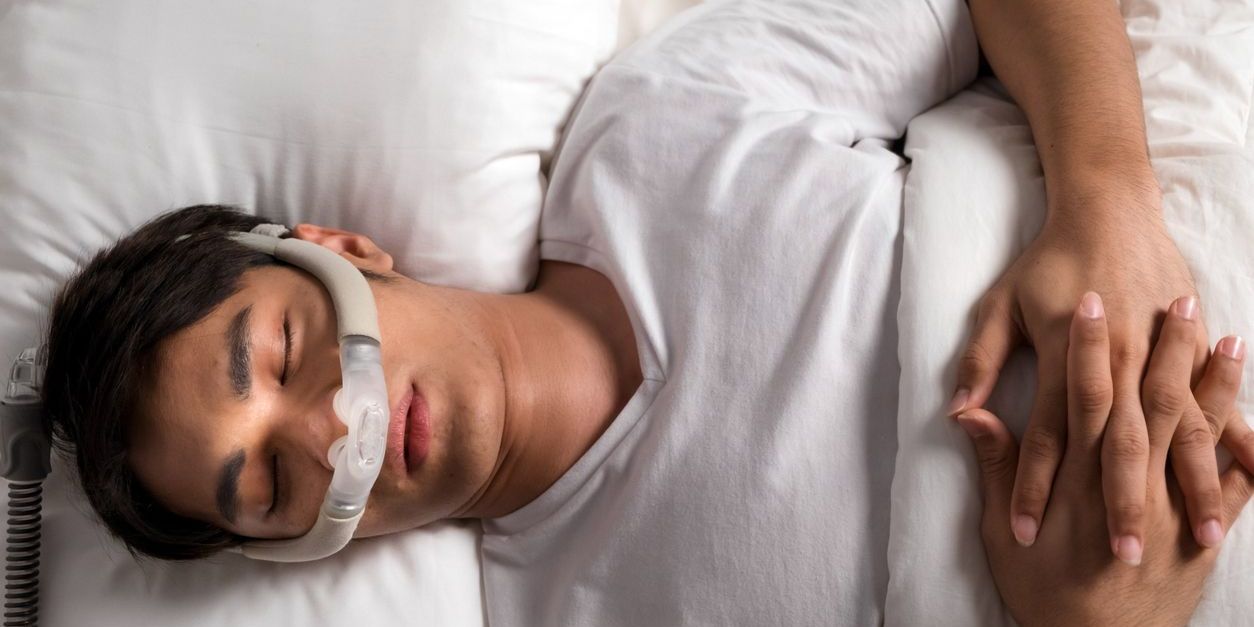
Summary: Yes, sleep apnea can affect mental health. Specifically, obstructive sleep apnea (OSA) can increase risk of two common mental health disorders.
Key Points:
- Obstructive sleep apnea (OSA) is associated with increased chronic health conditions
- Common mental health disorders are associated with increased risk for chronic health conditions associated with OSA
- New research examines the association of OSA with depression, anxiety, and overall mental health
What is Obstructive Sleep Apnea (OSA)?
When people hear the phrase sleep apnea or obstructive sleep apnea, most think that they’re both no more than extremely loud and disruptive snoring. However, that’s not the case. Snoring is a harmless phenomenon associated with partially obstructed airways. Snoring does not increase risk of health problems.
By itself, snoring – without sleep apnea – can:
- Annoy others
- Create mild sleep disturbance
- Create minor problems associated with sleep disturbance:
- Daytime tiredness
- Irritability
- Cognitive deficit
However, these issues are minor compared to those associated with sleep apnea and obstructive sleep apnea, which are both medical conditions that are more serious than the partially obstructed airways associated with snoring.
How is OSA different?
The National Institutes of Health (NIH) define obstructive sleep apnea (OSA) as follows:
“Obstructive sleep apnea (OSA) is a sleep disorder characterized by repeated episodes of complete (apnea) or partial (hypopnea) collapse of the upper airway, causing oxygen desaturation or sleep arousal. This disruption leads to fragmented, nonrestorative sleep.”
Those differences are significant. Rather than phlegm or mucus making breathing noisy, people with OSA experience temporary breathing blockage or failure, which can occur repeatedly throughout the sleeping hours.
That’s far more serious than snoring, with more severe consequences. Let’s take a closer look at obstructive sleep apnea.
Obstructive Sleep Apnea: Risk Factors, Symptoms, Complications
Given that OSA is a more serious condition than most people realize, it’s important to understand the various factors associated with OSA. Learning about risk factors, symptoms, and complications will also help us understand how sleep apnea can affect mental health.
We’ll start with the risk factors. Studies from the NIH identify the following risk factors for OSA
- Obesity
- Older age
- Alcohol/drug use
- Enlarged tonsils
- Male gender
- Some endocrine/hormonal imbalances
- Family history of OSA
Next, we’ll share what to watch for if you suspect you, a family member, or a loved one have obstructive sleep apnea that may affect mental health. Symptoms of OSA include:
- Daytime fatigue
- Headaches
- Difficulty concentrating
- Problems with attention
- Excessive, loud, chronic snoring
- Breathing interruptions/pauses during sleep
- Gasping for air during sleep
- Loud, chronic snoring
- Next day dry throat/mouth upon
- Short-term memory/learning problems
- Irritability
- Changes in mood
Finaly, we’ll share the complications associated with OSA, as identified by the NIH:
General:
- Decreased mental wellbeing
- Decreased quality of life
- Accidents related to sleep loss/disturbance
Specific:
- Hypertension
- Myocardial infarction, a.k.a. heart attack
- Atrial fibrillation, a.k.a. irregular heart rhythm
- Congestive heart failure, or long term condition defined by inability of the heart to pump blood efficiently/sufficiently enough for basic physical needs
- Cerebrovascular accident, a.k.a. stroke
- Depression
Again, we see well-respected sources showing that sleep apnea, and more specifically, obstructive sleep apnea, is associated with serious issues. Preliminary research shows sleep apnea can affect mental health – and new research expands our understanding of the relationship between sleep apnea and mental health.
New Research: How Sleep Apnea Can Affect Mental Health
A group of mental health researchers from the University of Ottawa in Ontario, Canada designed a study called “Obstructive Sleep Apnea Risk and Mental Health Conditions Among Older Canadian Adults in the Canadian Longitudinal Study on Aging” in order to answer the following question:
“Is high risk of obstructive sleep apnea (OSA) associated with increased odds of concurrent and future mental health conditions among middle-aged and older adults?”
To conduct the study, researchers gathered data on 30,097 adults, age 45+, from the Canadian Longitudinal Study on Aging (CLSA). The research team established baseline data from records collected between 2011-2015, with follow-up data collected an average of three years post-baseline, between 2015-2018.
They analyzed the following:
- Level of risk for obstructive sleep apnea (OSA) as defined as a score of (2) or above on the STOP-BANG questionnaire, which measures:
- Snoring
- Daytime somnolence, a.k.a. sleepiness
- Witnessed apnea, a symptom of sleep apnea
- Hypertension
- Presence of mental health disorders and/or symptoms, as measured by:
- A score of (10) or higher on the Center for Epidemiologic Studies Short Depression Scale (CES-D)
- A score of (20) or higher on the Kessler Psychological Distress Scale (KPDS)
- Diagnosis of clinical mental health disorder – self report or prior physician diagnosis
- Self-reported use of antidepressant medication
Researchers identified risk of OSA and risk of instances of others observing the symptoms of gasping and struggling for breath associated with OSA. In addition, they identified a composite mental health risk score at baseline, defined as the presence of any variable on MH criteria listed above
At baseline, researchers found the following:
- High risk of OSA: present in 23.5% of patients
- Composite MH risk: present in 34.5% of patients
Let’s take a look at the detailed outcomes at baseline and 2-3 year follow up.
Sleep Apnea and Mental Health: The Results
At baseline, the research team identified high risk of OSA or witnessed apnea, by MH composite score and condition. For these statistics, percent increased risk means that, in the presence of the conditions listed, risk of OSA and witnessed apnea increases by the percentage indicated:
- Composite MH score:
- High risk of OSA: 39% increased risk
- Witnessed apnea: 43% increased risk
- Depression:
- High risk of OSA: 38% increased risk
- Witnessed apnea: 47% increased risk
- Mood disorder:
- High risk of OSA: 32% increased risk
- Witnessed apnea: 40% increased risk
- Anxiety:
- High risk of OSA: 37% increased risk
- Witnessed apnea: 29% increased risk
That initial baseline data allows at least one initial conclusion: there’s a connection between mental health and OSA, with presence of mental health disorders associated with a statistically significant risk of OSA.
Researchers collected follow up data 2-3 years after collecting baseline data. They adjusted models to eliminate confounders and ensure accuracy. Once they completed a rigorous statistical analysis, they quantified percent increased risk of high risk of OSA or witnessed apnea by mental health diagnosis.
Here’s what they found at 2-3 year follow up:
- Composite MH score:
- High risk of OSA: 44% increased risk
- Witnessed apnea: 47% increased risk
- Depression:
- High risk of OSA: 48% increased risk
- Witnessed apnea: 51% increased risk
- Mood disorder:
- High risk of OSA: 46% increased risk
- Witnessed apnea: 50% increased risk
- Anxiety:
- High risk of OSA: 48% increased risk
- Witnessed apnea: 36% increased risk
Here’s how the research team characterize these results:
“In this national longitudinal cohort study, middle-aged and older adults at high risk of OSA had consistently worse mental health outcomes.”
This offers a definitive answer to the question we pose in the title of this article: yes, sleep apnea can affect mental health. In fact, people at high risk of OSA showed:
- 40% increased risk of mental health disorders at baseline
- 44% increased risk of mental health disorders after 2-3 years
We’ll discuss these results below.
Sleep Apnea and Mental Health: Understanding Risk, Helping Patients
The presence of a mental health disorder increases risk of several chronic health conditions, notably problems with cardiometabolic conditions such as hypertension, type 2 diabetes, obesity, and heart disease.
The presence of OSA is associated with increased risk of the same set of chronic diseases and illnesses. Therefore, when a patient presents with both a clinical mental health disorder and OSA, it’s important to understand how that increases risk. When we understand all the conditions present, their relationships, and their impact on overall health, we can better support our patients, and promote total healing for the whole person.
This study shows we can do something simple, upon intake, to safeguard the health of our patients who seek support for mental health disorders. We can screen for OSA. The study authors concur, but from the perspective of primary care physicians and other providers:
These findings highlight the importance of systematic mental health screening for older adults at risk for OSA. Incorporating mental health assessment tools into sleep evaluation may help identify individuals at greatest risk and support early intervention.

Angus Whyte has an extensive background in neuroscience, behavioral health, adolescent development, and mindfulness, including lab work in behavioral neurobiology and a decade of writing articles on mental health and mental health treatment. In addition, Angus brings twenty years of experience as a yoga teacher and experiential educator to his work for Crownview. He’s an expert at synthesizing complex concepts into accessible content that helps patients, providers, and families understand the nuances of mental health treatment, with the ultimate goal of improving outcomes and quality of life for all stakeholders.

 Giavanna Aplin, MSN, FNP-C
 Heather Huitema, PMHNP-BC
 Dr. Mark Melden
 Myriame Nicolas, PMHNP-BC
 Charlie Perez, PMHNP-BC
 Kelvin Poon, MSN, PMHNP-BC

 Apneet Mann, FNP-C
 Joanne Talbot Miller, M.A., LMFT
 Rachael Hueftle, NP
 J. Heather Fitzpatrick, LCSW
 Agata Nowakowska
 Brianna Meacham
 Maha Moses, PhD
 Rebecca McKnight, PsyD
 Tiffany Holm N.P.
 Dede Echitey, PMHNP-BC